
Label & Narrow Web
Compact Control for Tight Spaces and Clear Materials.
Overview
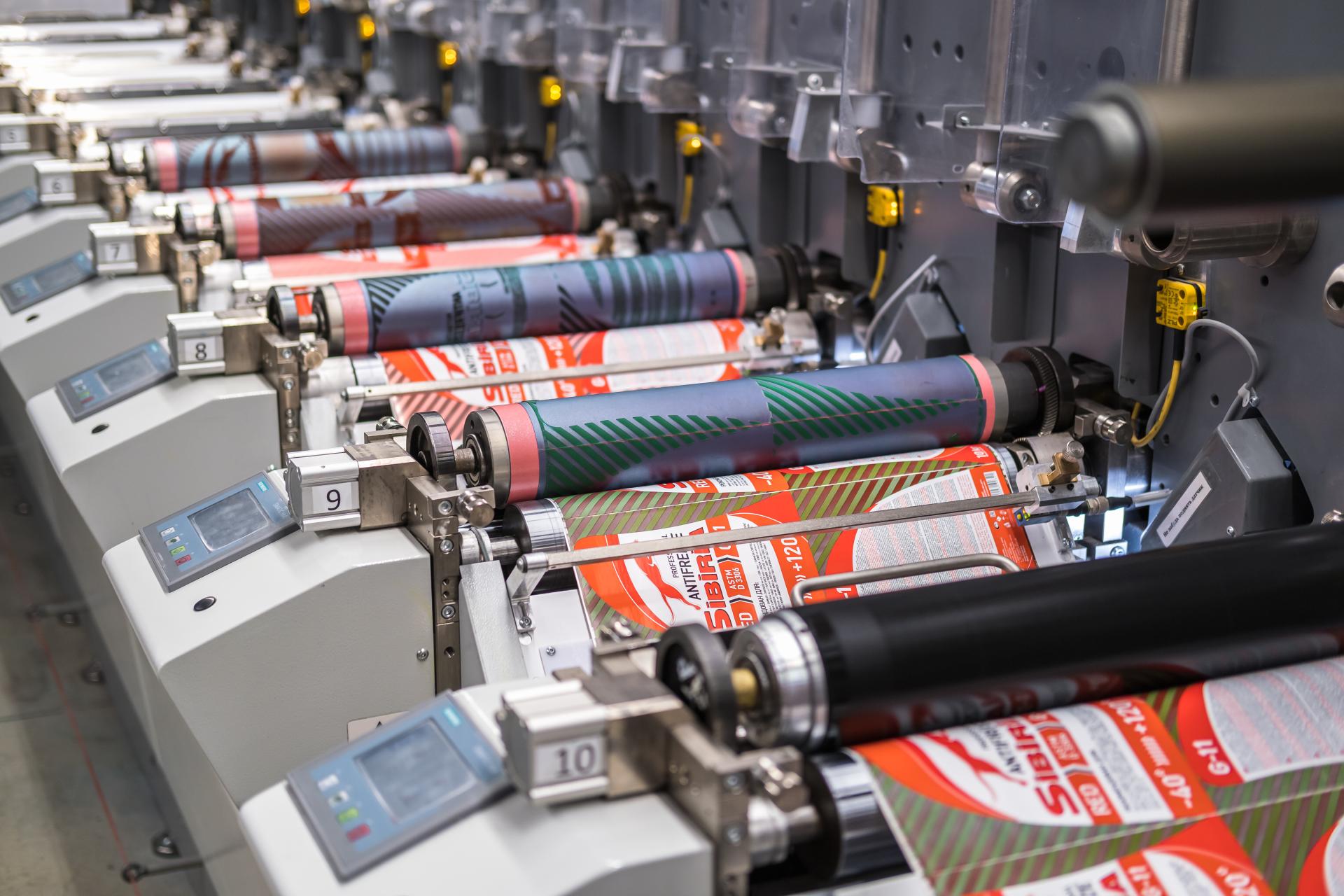
The Narrow Web market is focused on label printing (flexo/digital) and converting. Space is the defining constraint. Roll-2-Roll delivers high-performance guiding that fits where others can't, offering a lower initial cost by integrating light source, optics, and camera into a single package. This compact, one-sided solution solves the industry's toughest material challenges like clear-on-clear detection with no calibration required.
The Engineering Challenge
Label converters face physical and material constraints that limit productivity.
- Extreme Space Constraints: There is often no room for standard web guides. Controllers must be mounted remotely, and large sensor frames obstruct the operator's view and hand access.
- Matrix Removal Issues: Guiding the fragile waste skeleton after die-cutting is difficult; breaks stop the press.
- Clear-on-Clear Labels: Detecting a clear label on a clear liner to trigger a dispenser or check for missing labels is a known industry "Holy Grail" challenge.
The Roll-2-Roll Technical Advantage
We engineered our solutions to disappear into the machine while providing superior visibility.
- Compact and One-Sided: Our sensors act as line scan cameras but fit in tight spaces, mounting 15-25 mm from the web (standard working distance). The controller is located outside the guard door, saving valuable space inside the press.
- Integrated Architecture: The all-in-one sensor design removes the need for bulky gantries, allowing installation in tight gaps between print stations without separate light sources or frame grabbers.
- Material-Independent: Works on paper, clear film, and metallic labels without recalibration.
Key Applications
1. Low Profile Web Guiding
Install guides in tight spaces without compromising accessibility. Our compact actuators and remote electronics allow for seamless integration into crowded label presses.
2. Die-Cut Feature Tracking
The sensor can detect the edge of a die-cut label relative to the release liner, measuring the gap or "matrix" width. This ensures the waste matrix is stable and prevents breaks that stop the press.
3. Release Liner Slitting
Ensures the precise width of the release liner in label stock production. The sensor acts as a high-speed line camera to monitor slit widths, ensuring all lanes are present and within tolerance.
Supported Web Guiding Solutions
Compact and precise solutions for the narrow web market.
- Edge Guiding: The workhorse of the label industry. Keeps the web aligned into the printing press or die station. Roll-2-Roll's low-profile guides fit where others can't.
- Line & Contrast Guiding: Guides the web based on a printed line or a contrast edge (like the edge of a label matrix) rather than the physical material edge. Critical for multi-pass printing or die-cutting registration.
- Rewind Guiding: Ensures finished label rolls are wound perfectly straight ("flat disk" winding) for high-speed application lines.
Technical Comparison
The "Scanner vs. Laser Pointer" Analogy: Comparing an Roll-2-Roll Sensor to a standard photo-eye is like comparing a flatbed scanner to a laser pointer. A standard photo-eye (laser pointer) only tells you if something is blocking a specific spot. The Roll-2-Roll sensor (scanner) images the entire edge profile, creating a clear picture of where the label starts and stops.
- Space Claim: Competitors use bulky frames. Roll-2-Roll offers Low Profile / Remote Electronics.
- Installation: Retrofitting is difficult with C-frames. Roll-2-Roll's One-Sided Mount simplifies upgrades.
- Flexibility: Standard sensors do one thing. Roll-2-Roll sensors are Multifunctional.