
Flag Detection
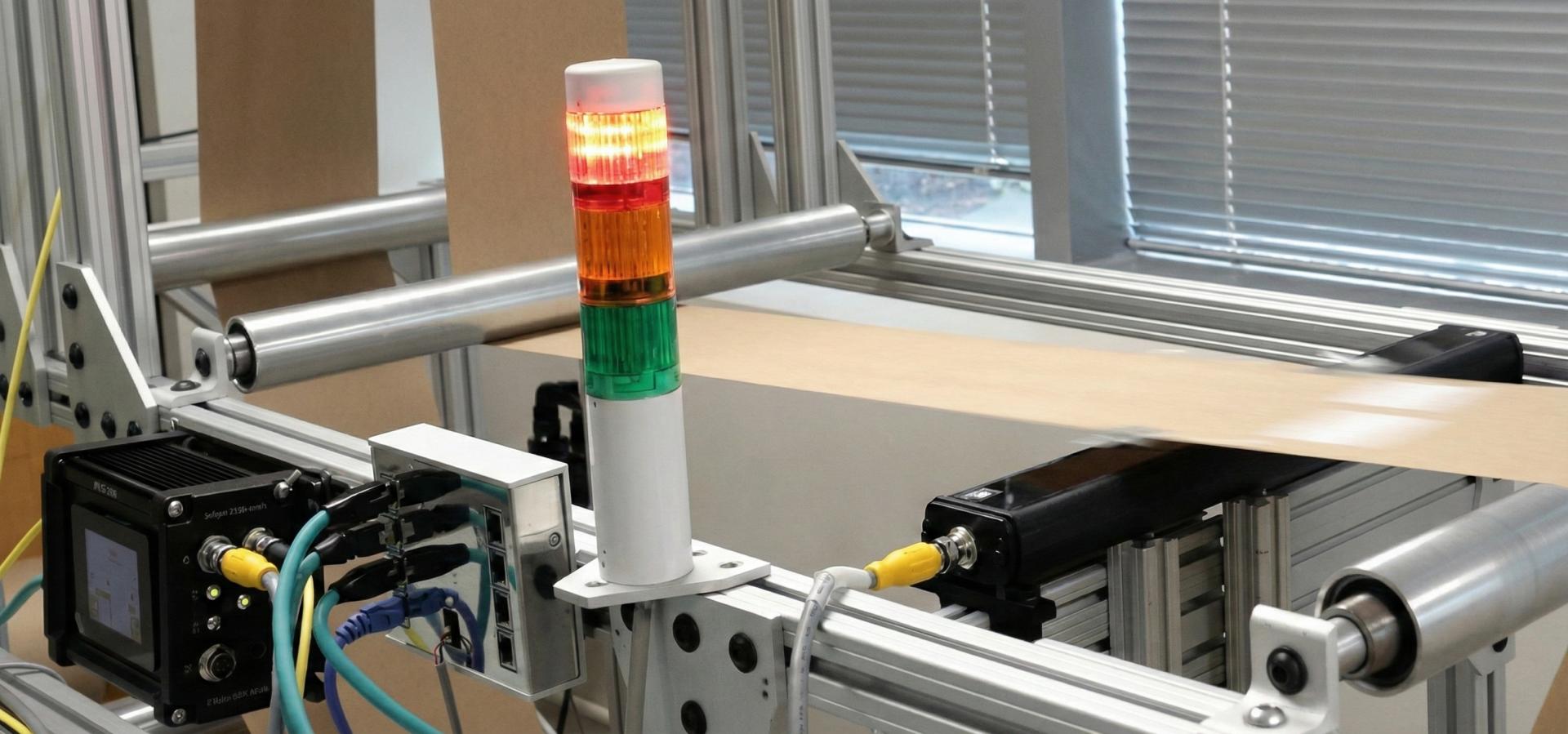
Flag detection identifies defect flags, markers, and edge protrusions that indicate quality issues in roll-to-roll production. Roll-2-Roll Technologies provides intelligent sensors that detect flags automatically while ignoring normal web movement like flutter or wander—preventing false alarms that plague standard photo-eyes. The system triggers reject mechanisms or marks the location of the defect, ensuring defective material is removed before it reaches the customer.
The Challenge: Missed Flags and False Alarms
Manually flagging defects during production creates downstream problems:
- Flags Fall Off: Adhesive flags placed by operators often detach during winding, causing the defect to pass unnoticed to the customer.
- Narrow Sensor Windows: Standard photo-eyes with 10-20mm viewing areas miss flags when the web wanders outside the narrow detection zone.
- False Alarms from Web Movement: Traditional sensors trigger on normal web flutter or edge wander, creating nuisance alarms that operators learn to ignore.
- Manual Inspection Failures: Relying on operators to manually inspect and flag every roll is time-consuming and prone to human error.
The Solution: Intelligent Flag Detection with Motion Filtering
The Roll-2-Roll® Controller (or a 1DC Series sensor) processes the sensor image to separate true flags from normal web movement.
How It Works
- Wide Viewing Area: Sensors with viewing areas up to 960mm detect flags even during significant web wander
- Flutter Immunity: The system ignores short-duration events caused by web flutter or temporary edge movement
- Flag Length Threshold: Operators set minimum flag length (e.g., 10mm) to trigger detection, filtering out noise
- Automatic Marking: When a true flag is detected, the system triggers reject mechanisms or logs the defect location
Key Advantage: Intelligent filtering eliminates false alarms while ensuring no actual flags are missed—critical for high-value materials like battery electrodes or medical films.
Key Benefits
- Eliminate Missed Defects: Automated detection replaces unreliable manual flagging
- No False Alarms: Intelligent algorithms distinguish flags from web flutter and wander
- Wide Detection Zone: Captures flags across the full web width, even during movement
- Automatic Defect Removal: Triggers reject mechanisms to ensure defective material doesn't reach customers
- Data Logging: Records defect locations and timestamps for quality traceability
Applications by Industry
- Battery Manufacturing — Detect flagged electrode defects (tears, coating voids) to prevent defective cells from entering assembly.
- Nonwovens — Identify flagged areas where web breaks or contamination occurred during production.
- Converting & Packaging — Detect flags marking splice locations, thickness variations, or print defects.
- Medical Device Manufacturing — Ensure no flagged defects enter sterile packaging lines.
- Film Extrusion — Monitor rewind stations for flags indicating gels, contamination, or gauge variations.
Related Solutions
- Splice Detection — Detect tape splices and butt joints
- Surface Defect Detection — Automated detection of holes, tears, and voids
- Edge Detection — Monitor web position and edge quality