
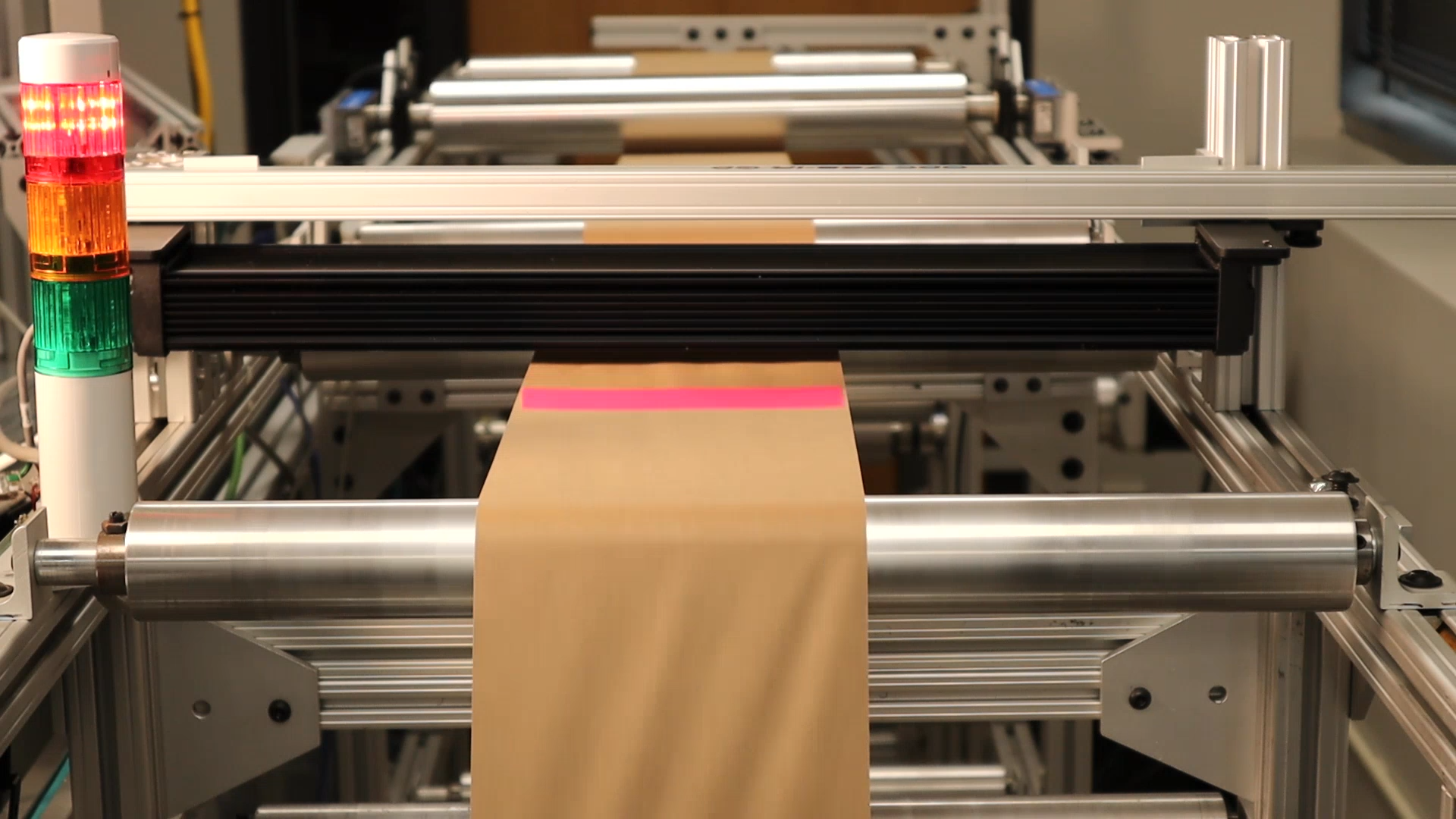
Splice Detection
Splice detection identifies tape splices, overlaps, and butt joints as they move through converting, printing, and coating machinery. Roll-2-Roll Technologies provides sensors that detect splices automatically—including transparent splices on clear webs—preventing splice-related damage to downstream equipment and ensuring splice-free product delivery to customers. Unlike standard photo-eyes that struggle with clear materials, our sensors detect the subtle density and thickness changes that indicate a splice.
The Challenge: Undetected Splices Cause Damage and Quality Failures
Splices are necessary to join rolls during production, but they create significant problems:
- Equipment Damage: Splices entering printing presses, laminators, or coating dies cause damage to expensive plates, dies, and doctor blades.
- Customer Rejections: Splices in finished product packaging create visual defects and structural weak points that fail quality inspections.
- Clear-on-Clear Detection Failure: Traditional photo-eyes cannot detect transparent splice tape on clear films—the most common scenario in flexible packaging.
- Manual Flagging Waste: Operators manually flag splices with colored tape, but flags are often missed or fall off, allowing splices to pass undetected.
The Solution: Automated Splice Detection with Material Intelligence
Roll-2-Roll splice detection sensors analyze the full width of the web, detecting density changes, thickness variations, and edge irregularities that indicate a splice.
How It Works
- Full-Width Scanning: The sensor captures a 1D image across the entire web width
- Density Analysis: Advanced algorithms detect the subtle density change where splice tape overlaps the web
- Edge Irregularity Detection: Butt splices create edge disruptions that the sensor identifies instantly
- Automatic Flagging: When a splice is detected, the system triggers reject mechanisms or marks the location for removal
Key Advantage: Detects clear-on-clear splices that defeat standard photo-eyes. Works on opaque, transparent, and porous materials without calibration.
Key Benefits
- Prevent Equipment Damage: Stop the line before splices enter expensive downstream equipment
- Eliminate Customer Rejections: Ensure splice-free product delivery by rejecting spliced sections automatically
- Detect All Splice Types: Identifies tape splices, butt splices, and hidden double-sided tape
- Works on Clear Films: Detects transparent splice tape on transparent webs—the "Holy Grail" of splice detection
- No Manual Flagging: Automated detection eliminates reliance on operators manually flagging splices
Applications by Industry
- Flexible Packaging Converting — Prevent splices from entering pouch making equipment. Protect printing plates and coating dies.
- Label Printing — Detect splices before they damage expensive flexo plates or digital print heads.
- Battery Manufacturing — Remove spliced electrode sections that create cell performance inconsistencies.
- Medical & Pharma — Ensure splice-free packaging for sterile medical devices and pharmaceutical products.
- Film Extrusion — Monitor rewind stations to detect splices in incoming rolls before they enter the extruder.
Related Solutions
- Edge Detection — Monitor web edge position
- Flag Detection — Detect flags and markers
- Surface Defect Detection — Detect holes, tears, and contamination