
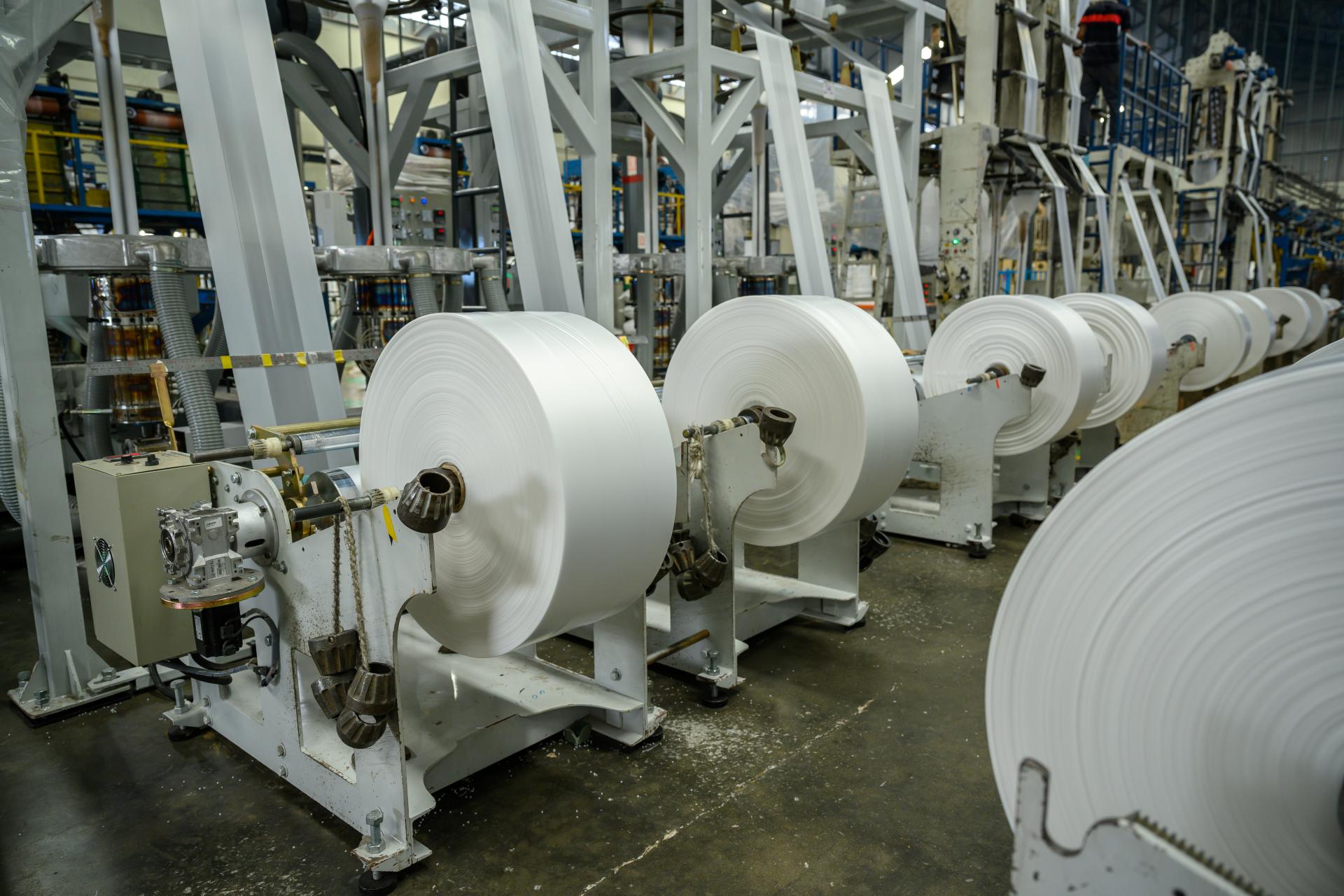
Nonwovens & Hygiene
Guiding the Unguidable: Reliable Sensing for Porous and Low-Tension Webs
Overview
The nonwovens sector (diapers, sanitary napkins, medical textiles) processes materials that are lightweight, highly porous, and fragile. Roll-2-Roll sensors excel here because with One Sensor for Any Material—capable of detecting porous webs that baffle traditional ultrasonic or air sensors without requiring any calibration. We offer a Vision System in a Sensor Package that requires no programming and sets up in minutes.
The Engineering Challenge
Standard sensors often fail due to the unique physical properties of nonwoven webs.
- Porosity & Signal Loss: Nonwovens are nets of fibers. Sound passes through them (confusing ultrasonic sensors), and air passes through them (useless for pneumatic sensors). Optical sensors often "see through" the gaps, causing the web guide to oscillate wildly.
- Material Fragility: Low-basis weight webs are easily stretched or distorted. Contact sensors are impossible to use.
- Dust & Contamination: The environment is filled with cellulose fibers and Superabsorbent Polymer (SAP) dust that coats lenses, blinding standard photo-eyes.
The Roll-2-Roll Technical Advantage
Our technology uses a fiber-optic array that "sees" the web structure, functioning as a one-dimensional line scan camera.
- Fiber Detection, Not Gap Detection: Because we rely on light scattering, we detect the fibers themselves. This provides a stable signal on even the most porous, low-basis weight nonwovens where others fail.
- No Calibration Required: The system does not require calibration when switching materials; it can detect the edge of a porous mesh or a clear film immediately without setup changes.
- Dust Immunity: The fiber-optic design and infrared spectrum make the system robust against dust accumulation. The sensor can often "see" through a layer of dust that would blind a standard camera.
- Wide Viewing Area: Accommodates the significant neck-in and width variations common in varying tension zones of nonwoven lines (up to 960mm).
Key Applications
1. Porous Material Handling
Unlike air or ultrasonic sensors that struggle with porous materials, these sensors detect the edge of high-porosity nonwovens and meshes without calibration. This ensures stable guiding on breathable films, spunbond, and meltblown materials.
2. Diaper Manufacturing
Used to measure the width of folded layers to prevent cosmetic defects and functional failures (e.g., glue buildup caused by incorrect folding). In multi-layer lamination, the Material-Independent sensor handles opaque backsheets and porous topsheets with a single setting.
3. Glue Application Monitoring
Using UV light sources, the sensors can track the width and position of UV fluorescent glue lines on hygiene products, ensuring proper adhesive application and reducing product failure.
4. SAP Dust Environments
Reduce cleaning downtime. Roll-2-Roll sensors maintain operation in high-dust zones where cellulose and polymer particulates accumulate, keeping high-speed hygiene lines running longer between maintenance stops.
Supported Web Guiding Solutions
Versatile guiding for hygiene product assembly.
- Center Guiding: Critical for diaper and pad lines where multiple layers of varying widths must be centered relative to each other.
- Master-Slave Guiding: Synchronizes the position of a specialized layer (e.g., acquisition layer) to the position of the main chassis web, ensuring perfect construction alignment.
- Edge Guiding: Reliable guiding of the main nonwoven web into the converting process, using our fiber-optic sensors to ignore porosity.
Technical Comparison
The "Scanner vs. Laser Pointer" Analogy: Comparing an Roll-2-Roll Sensor to a standard photo-eye is like comparing a flatbed scanner to a laser pointer. A laser pointer sensor sees a hole in a nonwoven web and thinks the web is gone. An Roll-2-Roll sensor (scanner) sees the pattern of fibers and understands "this is a porous web," maintaining stable guiding without false corrections, all while remaining Simple to Operate.
- Porous Materials: Ultrasonic sensors see "holes." Roll-2-Roll sees Fibers (Stable signal).
- Contamination: Standard lenses get blocked by dust. Roll-2-Roll's Fiber-optic Design offers superior dust immunity.
- Setup: Requires tuning for opacity/density. Roll-2-Roll requires No Calibration for density changes.
- Cost: Vision systems need experts. Roll-2-Roll needs No Programming.