
Paper & Printing
High-Speed Precision: Immune to Dust and Flutter.
Overview
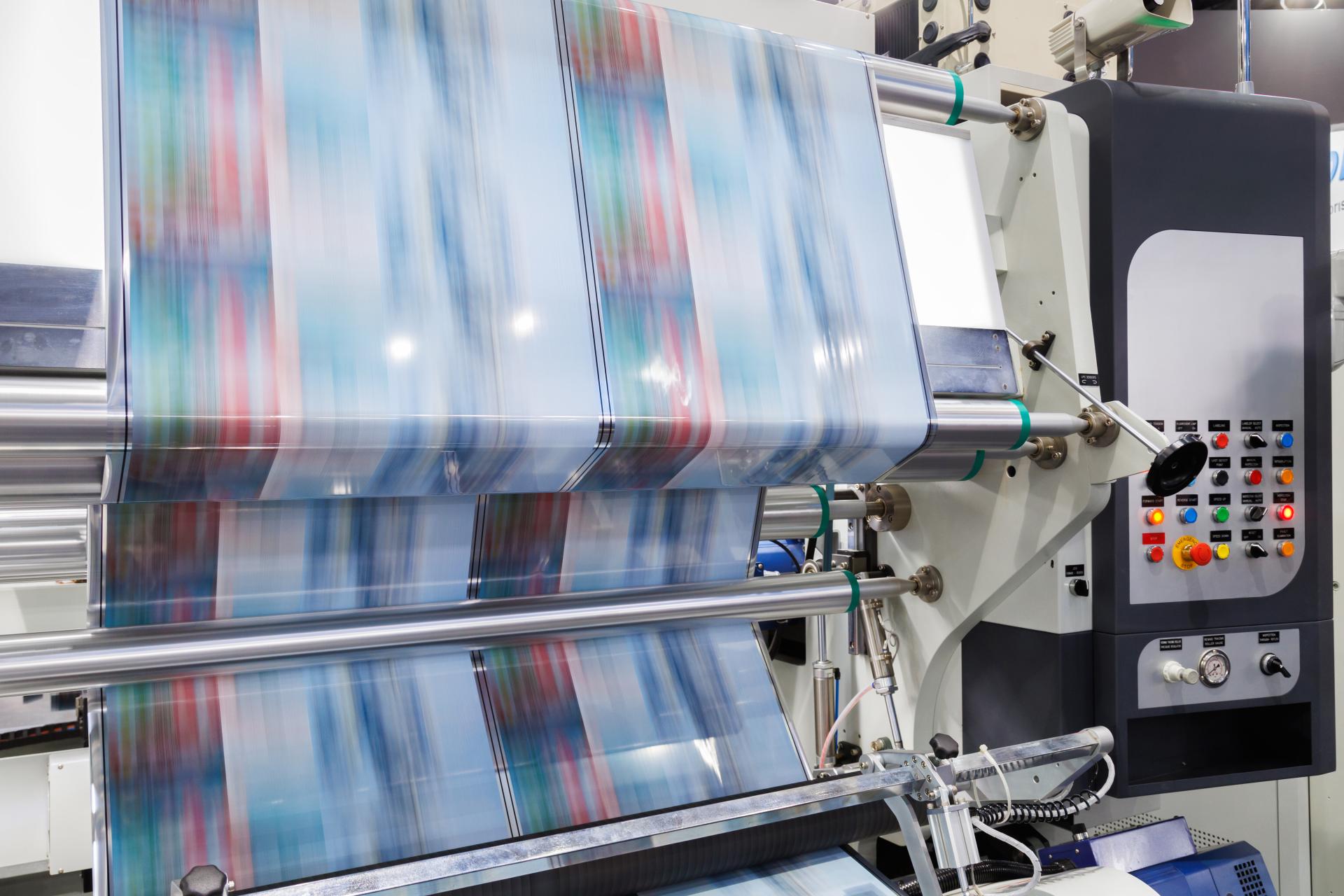
High-speed printing and paper converting are driven by speed, often reaching 2000 fpm. Roll-2-Roll sensors provide stable guiding that ignores the flutter and dust inherent to high-speed paper processing. By integrating line scan camera technology into a sensor package, we offer the precision of vision systems without the high cost or engineering complexity. Our linear optical technology ensures distortion-free imaging even at top speeds.
The Engineering Challenge
Speed creates instability that confuses standard sensors.
- Web Flutter: At high speeds, paper webs flutter aerodynamically. This vertical movement causes standard sensors to misread the lateral position (parallax error).
- Dust: Paper dust is abrasive and coats lenses, reducing signal strength over time.
- Splice Damage: Undetected splices can damage delicate printing plates or blankets, causing expensive downtime.
The Roll-2-Roll Technical Advantage
Our optical design is inherently stable against Z-axis movement and tough environments.
- Flutter Immunity: The collimated light source and spatial filtering of the Roll-2-Roll sensor make it insensitive to plane changes (flutter). It tracks the true edge position regardless of vertical web movement.
- Dust Robustness: The infrared light source and fiber-optic design penetrate dust buildup better than visible light sensors, reducing cleaning frequency.
- No Calibration Required: The system does not require calibration when switching paper grades; it can detect the edge immediately without setup changes.
- Spatial Awareness: Unlike analog edge sensors, these sensors can detect multiple edges, thread counts, or specific features within their view.
Key Applications
1. Slitting Quality Control
Used to measure paper width during slitting operations to ensure tolerance adherence. The sensor's depth of field ensures that vertical web movement (flutter) is not misinterpreted as lateral shift, preventing "ghost" corrections and maintaining precise register.
2. Coating Width & Presence
Detects the presence and width of coatings on paper (e.g., adhesives or chemical treatments) by analyzing the contrast difference between the coated and uncoated sections. This ensures uniform application and reduces material waste.
3. Splice & Tear Detection
The sensor possesses spatial awareness to detect the sudden density change of a splice or the absence of material (tear) at full line speed, triggering safety gates or rejection systems to protect print heads.
4. Corrugated Board Measurement
Dual sensor setups are used to measure the total width of wide corrugated boards, ensuring the final product meets dimensional specifications.
Supported Web Guiding Solutions
High-speed precision for printing and paper converting.
- Line & Contrast Guiding: The standard for printing. Guides the web based on a printed line or pattern to ensure colors overlap correctly (registration) or die-cuts match the print.
- Edge Guiding: Maintains the paper web position into the printing press or slitter.
- Center Guiding: Used when paper roll widths vary or when the web must be centered for coating/laminating operations.
- Unwind & Rewind Guiding: Ensures stable web entry and perfectly wound final rolls, critical for preventing edge damage during transport.
Technical Comparison
The "Scanner vs. Laser Pointer" Analogy: Comparing an Roll-2-Roll Sensor to a standard photo-eye is like comparing a flatbed scanner to a laser pointer. A laser pointer's dot jumps around on a fluttering web, causing false readings. An Roll-2-Roll sensor (scanner) sees the entire "picture" of the edge position relative to the sensor regardless of whether the paper moves up or down (flutter), ensuring stability where simple sensors fail.
- Flutter: Causes parallax error in standard sensors. Roll-2-Roll's Collimated Optics are immune.
- Dust: Coats lenses quickly. Roll-2-Roll's Infrared Source penetrates dust better.
- Speed: Standard sensors lag. Roll-2-Roll enables Real-Time Correction at 2000 fpm.
- Cost: Vision systems are expensive. Roll-2-Roll offers Camera Performance at Sensor Cost.